-
NexGen Proteinase K, 100 mg
NexGen Proteinase K is a highly efficient serine protease that exhibits broad substrate specificity. It is commonly used for the digestion of proteins, including those resistant to other proteases, and is especially effective in removing nucleases from DNA and RNA preparations. This enzyme works over a wide range of temperatures and pH levels, making it versatile for various molecular biology applications. NexGen Proteinase K is a robust enzyme that can degrade a wide variety of proteins, including native proteins, during nucleic acid purification processes. It is active in the presence of SDS, urea, and other detergents, allowing it to function in complex lysis buffers. NexGen Proteinase K is available in both liquid and lyophilized forms, ensuring compatibility with different experimental needs.
-
NexGen Proteinase K, 50 mg
NexGen Proteinase K is a highly efficient serine protease that exhibits broad substrate specificity. It is commonly used for the digestion of proteins, including those resistant to other proteases, and is especially effective in removing nucleases from DNA and RNA preparations. This enzyme works over a wide range of temperatures and pH levels, making it versatile for various molecular biology applications. NexGen Proteinase K is a robust enzyme that can degrade a wide variety of proteins, including native proteins, during nucleic acid purification processes. It is active in the presence of SDS, urea, and other detergents, allowing it to function in complex lysis buffers. NexGen Proteinase K is available in both liquid and lyophilized forms, ensuring compatibility with different experimental needs.
-
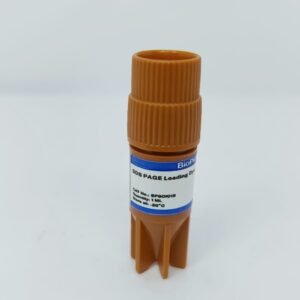
SDS PAGE Loading Dye, 4x
SDS-PAGE Loading Dye 4X is a concentrated dye used for preparing protein samples for sodium dodecyl sulfate-polyacrylamide gel electrophoresis (SDS-PAGE). This dye contains SDS, which imparts a negative charge to proteins, and other components that facilitate sample loading and visualization. The 4X concentration ensures that the dye can be diluted to the working concentration needed for gel electrophoresis, making it suitable for a variety of protein analysis applications. The SDS-PAGE Loading Dye 4X is a concentrated solution containing sodium dodecyl sulfate (SDS), glycerol, bromophenol blue, and other stabilizers. SDS is a detergent that denatures proteins and imparts a negative charge, allowing for their separation based on size during electrophoresis. The glycerol ensures that the samples sink into the wells of the gel, and bromophenol blue provides visual tracking of the sample during electrophoresis.
-
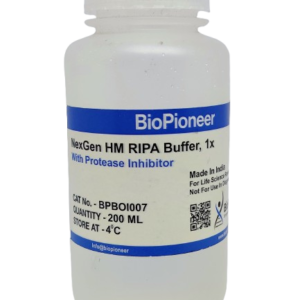
NexGen HM RIPA Buffer with Protease Inhibitor, 1X
NexGen HM RIPA Buffer with Protease Inhibitor is a powerful and versatile lysis buffer designed for the efficient extraction of total proteins from various cell and tissue types. This buffer is pre-formulated with a robust protease inhibitor cocktail, providing broad-spectrum protection against proteolytic degradation. NexGen HM RIPA Buffer is an ideal solution for researchers looking for a reliable, ready-to-use reagent for protein extraction, immunoprecipitation, and Western blotting applications.
NexGen HM RIPA Buffer with Protease Inhibitor is a ready-to-use reagent that combines the potent lysis capabilities of RIPA (Radio-Immunoprecipitation Assay) buffer with a comprehensive protease inhibitor cocktail. This dual-action buffer efficiently lyses cells and tissues while simultaneously protecting proteins from degradation by inhibiting serine, cysteine, and metalloproteases. NexGen HM RIPA Buffer is optimized for maximum protein yield and integrity, ensuring high-quality results in downstream applications.
-
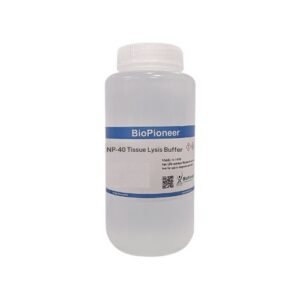
NP-40 Tissue Lysis Buffer, 100ML
NP-40 Tissue Lysis Buffer is a non-denaturing detergent buffer commonly used for the extraction of proteins, nucleic acids, and other macromolecules from tissues and cells. This buffer is specifically formulated to gently disrupt cell membranes while preserving the native structure and biological activity of proteins. NP-40, a nonionic surfactant, is the key component that facilitates efficient lysis of cellular membranes without denaturing the proteins, making this buffer ideal for applications requiring intact protein complexes or enzymatic activity. NP-40 Tissue Lysis Buffer is widely used in various biochemical and molecular biology applications, including protein purification, immunoprecipitation, and Western blotting. NP-40 Tissue Lysis Buffer is composed of NP-40 (Nonidet P-40), a non-ionic detergent, along with other buffering agents that maintain a stable pH environment during lysis. The buffer is designed to lyse cells effectively, solubilize membrane proteins, and release cytoplasmic and nuclear contents while minimizing the risk of protein degradation or denaturation. This makes it suitable for the extraction of functional proteins, protein complexes, and nucleic acids from tissue samples, cultured cells, and other biological materials.
-
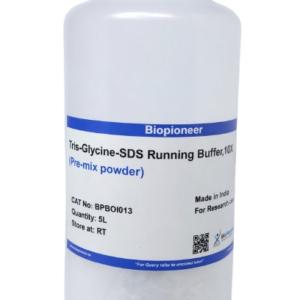
Tris-Glycine-SDS Running Buffer,(Pre -mix Powder)
Tris-Glycine SDS Running Buffer is a staple in SDS-PAGE (Sodium Dodecyl Sulfate-Polyacrylamide Gel Electrophoresis), used for the separation of proteins based on their molecular weight. This buffer, provided in a convenient pre-mix powder form, ensures precise and consistent results. The buffer is essential for denaturing electrophoresis, where proteins are uniformly separated in the gel matrix. The Tris-Glycine SDS Running Buffer is composed of Tris base, glycine, and SDS (Sodium Dodecyl Sulfate). Once dissolved in distilled water, it provides a stable pH environment (approximately 8.3) crucial for the denaturation and uniform migration of proteins during SDS-PAGE. The pre-mix powder is designed for convenience, ensuring that the buffer can be prepared quickly and accurately, reducing preparation time and minimizing errors.
-
RIPA Buffer, -200ML
RIPA (Radio-Immunoprecipitation Assay) Lysis Buffer is a versatile and powerful detergent-based buffer used for the extraction of total protein, including cytoplasmic, membrane-bound, and nuclear proteins, from various types of tissues and cultured cells. Known for its strong lysis capabilities, RIPA buffer effectively solubilizes proteins while maintaining the structural integrity of protein complexes, making it a preferred choice for applications requiring efficient and thorough cell lysis, such as protein quantification, immunoprecipitation, Western blotting, and enzyme assays.
-
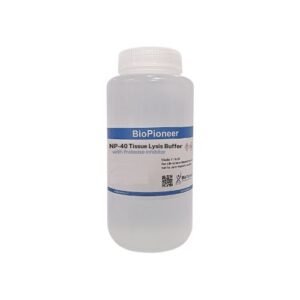
NP-40 Tissue Lysis Buffer with Protease Inhibitor, 1X
NP-40 Tissue Lysis Buffer with Protease Inhibitor is a pre-formulated, ready-to-use buffer designed for effective cell and tissue lysis, ensuring high protein yield and activity preservation. The inclusion of protease inhibitors safeguards proteins from degradation during extraction, making it ideal for applications in Western blotting, enzyme assays, and protein quantification. This NP-40 Tissue Lysis Buffer is a 1X solution containing NP-40, a nonionic detergent, for gentle yet effective lysis of cellular membranes, allowing for the release of cytoplasmic, nuclear, and membrane-bound proteins. The buffer also includes a blend of protease inhibitors to prevent proteolytic degradation, preserving protein function and integrity. The solution is sterile filtered to support compatibility with cell culture and sensitive proteomic workflows.
-
Phenylmethanesulfonyl Fluoride (PMSF), 1gm
Phenylmethanesulfonyl Fluoride (PMSF) is a serine protease inhibitor commonly used in protein purification and biochemical studies to prevent protein degradation. By inhibiting serine proteases, PMSF preserves protein integrity during cell lysis, extraction, and other procedures where proteases could otherwise degrade proteins of interest. PMSF is a potent, irreversible inhibitor of serine proteases, such as trypsin, chymotrypsin, and thrombin. Due to its rapid inactivation in aqueous solutions, PMSF is typically prepared fresh and added to lysis buffers and other protein solutions just before use. PMSF is soluble in organic solvents such as ethanol, isopropanol, and DMSO but has limited water solubility.
 Safety Data Sheet Technical Data Sheet
 -
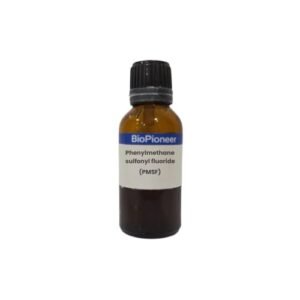
Phenylmethanesulfonyl Fluoride (PMSF), 25g
Phenylmethanesulfonyl Fluoride (PMSF) is a serine protease inhibitor commonly used in protein purification and biochemical studies to prevent protein degradation. By inhibiting serine proteases, PMSF preserves protein integrity during cell lysis, extraction, and other procedures where proteases could otherwise degrade proteins of interest. PMSF is a potent, irreversible inhibitor of serine proteases, such as trypsin, chymotrypsin, and thrombin. Due to its rapid inactivation in aqueous solutions, PMSF is typically prepared fresh and added to lysis buffers and other protein solutions just before use. PMSF is soluble in organic solvents such as ethanol, isopropanol, and DMSO but has limited water solubility.
Safety Data Sheet Technical Data Sheet -
Phenylmethanesulfonyl Fluoride (PMSF), 5g
Phenylmethanesulfonyl Fluoride (PMSF) is a serine protease inhibitor commonly used in protein purification and biochemical studies to prevent protein degradation. By inhibiting serine proteases, PMSF preserves protein integrity during cell lysis, extraction, and other procedures where proteases could otherwise degrade proteins of interest. PMSF is a potent, irreversible inhibitor of serine proteases, such as trypsin, chymotrypsin, and thrombin. Due to its rapid inactivation in aqueous solutions, PMSF is typically prepared fresh and added to lysis buffers and other protein solutions just before use. PMSF is soluble in organic solvents such as ethanol, isopropanol, and DMSO but has limited water solubility.
-
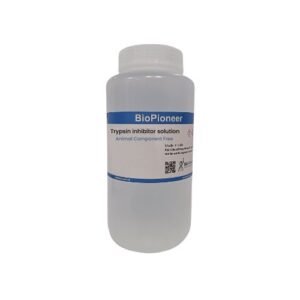
Trypsin Inhibitor Solution (Animal Component Free)-100ml
Animal Component-Free Trypsin Inhibitor Solution is designed for use in cell culture applications where the inhibition of trypsin activity is required without introducing animal-derived components. This solution is ideal for processes that prioritize cell viability and aim to minimize risk of contamination from animal sources, such as in cell therapy, biomanufacturing, and sensitive cell culture protocols. Trypsin Inhibitor Solution is formulated with a non-animal-derived trypsin inhibitor that effectively neutralizes trypsin activity in cell culture, preventing potential proteolytic damage to cells and surface proteins. It is sterile-filtered, ensuring its suitability for cell culture applications and regulatory-compliant workflows requiring animal component-free reagents.