-
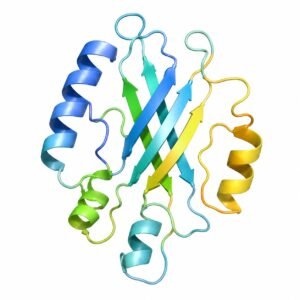
FGF 23(Fibroblast Growth Factor-23)
Fibroblast Growth Factor-23 Human Recombinant produced in E.Coli is a single, non-glycosylated polypeptide chain containing a total of 228 amino acids and having a molecular mass of 22.5kDa. The FGF-23 is and purified by chromatographic techniques. FGF-23 is a member of the fibroblast growth factor (FGF) family. FGF family members possess broad mitogenic and cell survival activities and are involved in a variety of biological processes including embryonic development, cell growth, morphogenesis, tissue repair, tumor growth and invasion. FGF-23 inhibits renal tubular phosphate transport. The FGF-23 gene was identified by its mutations associated with autosomal dominant hypophosphatemic rickets (ADHR), an inherited phosphate wasting disorder. Abnormally high-level expression of FGF-23 was found in oncogenic hypophosphatemicosteomalacia (OHO), a phenotypically similar disease caused by abnormal phosphate metabolism. FGF-23 mutations have also been shown to cause familial tumoral calcinosis with hyperphosphatemia.
Download TDS Download MSDS -
PLGF-1(Placental Growth Factor-1)
Insect Cells. Placenta Growth Factor-1 Human Recombinant produced in insect cells is a homodimer, glycosylated polypeptide chain containing 2 x 131 amino acids and having a total molecular mass of approximately 34 kDa. The PLGF-1 is purified by proprietary chromatographic techniques. PLGF is a growth factor active in angiogenesis, and endothelial cell growth, stimulating their proliferation and migration. It binds to receptor vegfr-1/flt1.
Download TDS Download MSDS -
TGFB1-1(Transforming Growth Factor Beta 1)
TGF-b 1 Human Recombinant produced in E.Coli is a single, non-glycosylated, polypeptide chain containing 113 amino acids (279-390 a.a.) and having a total molecular mass of 12.9 kDa. TGF-b 1 (113 a.a.) is purified by proprietary chromatographic techniques. Transforming growth factor betas (TGFBetas) mediate many cell-cell interactions that occur during embryonic development. Three TGFBetas have been identified in mammals. TGFBeta1, TGFBeta2 and TGFBeta3 are each synthesized as precursor proteins that are very similar in that each is cleaved to yield a 112 amino acid polypeptide that remains associated with the latent portion of the molecule.
Download TDS Download MSDS -
TGFB2(Transforming Growth Factor, beta-2)
TGFB2 Human Recombinant produced in plants is a homodimeric polypeptide chain containing 2 x 118 amino acids and having a total molecular mass of 27.08kDa. The TGFB2 is fused to 6xHis Tag at Nterminus and purified by proprietary chromatographic techniques. TGFB2 is a 27.08 kDa protein having two identical 118 amino acid peptide chains linked by a single disulfide bond. TGFB2 is part of a family of five related cytokines that have an extensive variation of normal and neoplastic cells, indicating the importance of these homo-dimmer proteins as multifunctional regulators of cellular activity. The three mammalian isoforms of TGF-? (TGFb1, TGFb2 and TGFb3) signal through the same receptor and stimulate similar biological responses. They are involved in physiological processes as embryogenesis, tissue remodelling and wound healing
Download TDS Download MSDS -
TGFB3(Transforming Growth Factor, Beta 3.)
TGF-beta 3 Human Recombinant produced in E.Coli is a disulfide-linked homodimeric, nonglycosylated, polypeptide chain containing two 112 amino acid chains and having a total molecular mass of 25.5kDa. The TGF-b 3 is purified by standard chromatographic techniques. Transforming growth factor betas (TGF Betas) mediate many cell-cell interactions that occur during embryonic development. Three TGF Betas have been identified in mammals. TGF Beta 1, TGF Beta 2 and TGF Beta 3 are each synthesized as precursor proteins that are very similar in that each is cleaved to yield a 112 amino acid polypeptide that remains associated with the latent portion of the molecule
Download TDS Download MSDS -
VEGF(vascular Endothelial Growth Factor)
Vascular Endothelial Growth Factor Human Recombinant produced in E.Coli is a double, nonglycosylated, polypeptide chain containing 165 amino acids and having a molecular mass of 38231 Dalton.The VEGF is purified by proprietary chromatographic techniques. Vascular endothelial growth factor (VEGF) is an important signaling protein involved in both vasculogenesis and angiogenesis. As its name implies, VEGF activity has been mostly studied on cells of the vascular endothelium, although it does have effects on a number of other cell types (e.g. stimulation monocyte/macrophage migration, neurons, cancer cells, kidney epithelial cells ). VEGF mediates increased vascular permeability, induces angiogenesis, vasculogenesis and endothelial cell growth, promotes cell migration, and inhibits apoptosis. In vitro, VEGF has been shown to stimulate endothelial cell mitogenesis and cell migration. VEGF is also a vasodilator and increases microvascular permeability and was originally referred to as vascular permeability factor.Elevated levels of the VEGF protein are linked to POEMS syndrome, also known as Crow-Fukase syndrome. Mutations in the VEGF gene have been associated with proliferative and nonproliferative diabetic retinopathy.
Download TDS Download MSDS